Founder & CEO
Applied UX research and design thinking end-to-end to conceive, launch, and scale a direct-to-consumer women's ready-to-wear brand — from user interviews and persona development to product design, brand identity, and go-to-market strategy.
Overview
Role: Founder, UX Designer Focus: 0→1 product design, user research, brand identity, DTC ecommerce
In 2020, I made a deliberate decision to take everything I'd built as a product designer — research methods, systems thinking, human-centered problem framing — and apply it to a different kind of product entirely: a physical one.
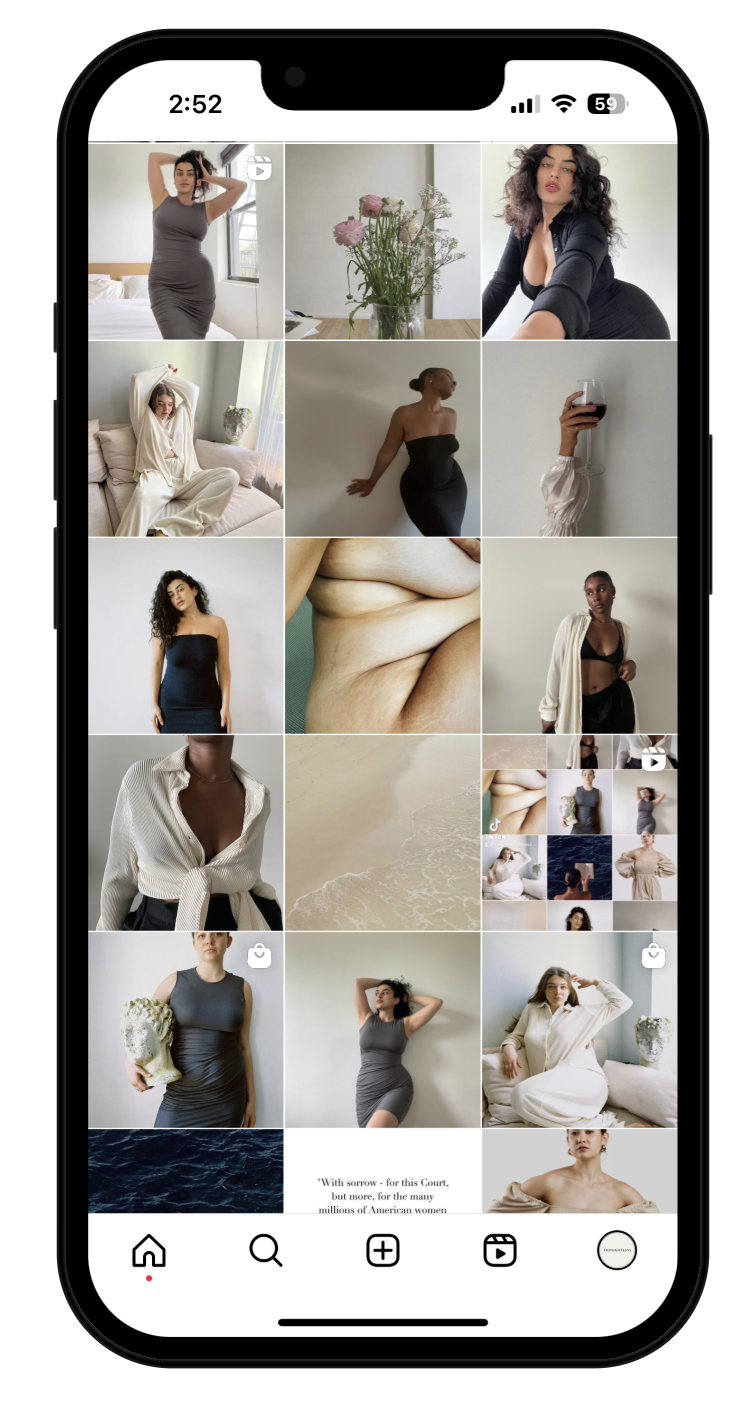
Thoughtless was a women's ready-to-wear brand I conceived, designed, and launched with the mission of offering elevated, timeless essentials that embraced rather than reshaped the body. From initial research through five years of operation, I owned every stage of the design process. The brand grew significantly — 151% revenue growth year over year, 500% subscriber growth, press coverage in ELLE and The Cut — before I closed it intentionally to return to product design full time.
This case study is about what I built and how I built it. But it's also about what five years of applying design thinking to a physical product, a real business, and a real customer taught me that I couldn't have learned any other way.
Problem
The women's ready-to-wear market has a well-documented gap at the intersection of quality, inclusivity, and accessibility. Premium basics exist — but they're expensive. Affordable basics exist — but they compromise on fabric, construction, and fit. And across both tiers, the dominant design assumption is still a narrow, standardized body type that excludes most women.
I came to this observation not as a fashion insider but as a researcher. I had a hypothesis. I wanted to test it before building anything.
Research
Before designing a single garment, I ran a research process modeled directly on how I'd approached digital product work at Meredith.
I conducted 20 open-ended user interviews with women across a range of ages, body types, and lifestyles, asking about their values, frustrations, and shopping behaviors. I supplemented these with broader survey research and a systematic competitive analysis of brands across the premium-to-mass market spectrum.
The interviews were the most generative part. Women consistently described the same experience: feeling like clothing was designed for someone else, and having to adapt themselves to fit the clothes rather than the other way around. One participant put it directly:
"I would love to see hip dips, stretch marks, hyperpigmentation, back rolls — just normal, natural looking women with real bodies."
Three findings shaped everything that followed:
Women wanted clothing that adapted to them, not the other way around. Fit and construction decisions that accommodated real body variation — not just size scaling — were the threshold requirement.
Trust was built through representation. Participants were more likely to purchase from and remain loyal to brands whose marketing reflected their bodies and values. Authenticity in imagery wasn't a nice-to-have; it was a trust signal.
The quality-accessibility gap was real and felt acutely. Participants knew what they wanted — sophisticated, durable basics — and consistently couldn't find it at a price point that felt reasonable.
I developed four research-grounded personas to represent the primary user segments, which I used to pressure-test design and product decisions throughout the project.
“I would love to see hip dips, stretch marks, hyperpigmentation, back rolls...just normal, natural looking women with real bodies..”
— Ashley T.
Design Process
With research complete, I moved into product design — which in this context meant garment design, brand identity, and digital experience simultaneously.
Product design and fit development: I sketched and designed an initial capsule collection of elevated basics, translating research findings directly into construction decisions. Each piece went through five to six sample iterations, with fit testing across multiple body types at each round. The goal wasn't just size inclusivity — it was fit that actually worked differently across body shapes, which required working closely with pattern makers to rethink standard construction assumptions. I sourced and vetted over a dozen manufacturers before selecting two who could deliver consistent quality at an accessible price point, including evaluating fabric performance across 15+ swatches and stress-testing for shrinkage, pilling, and durability.
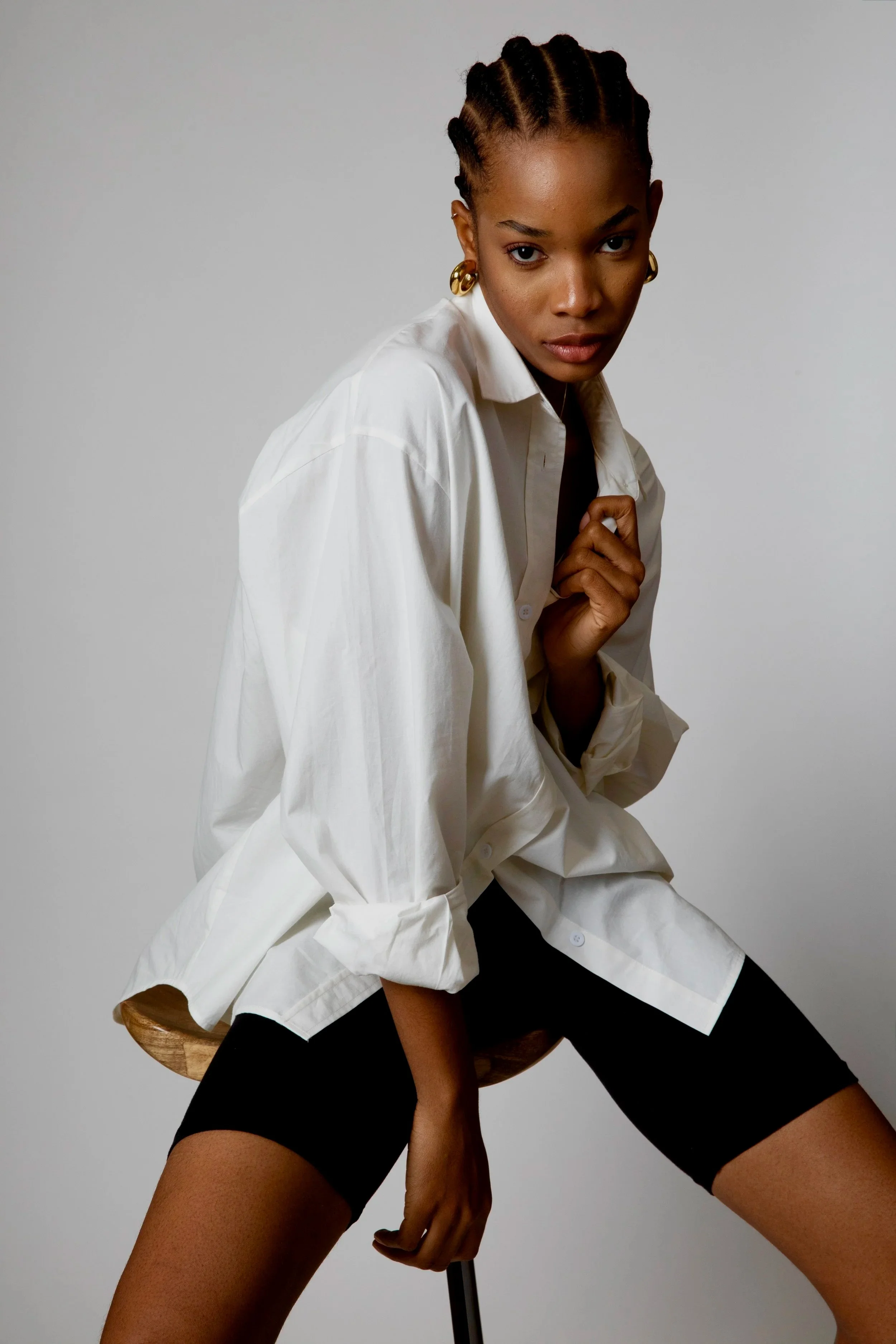
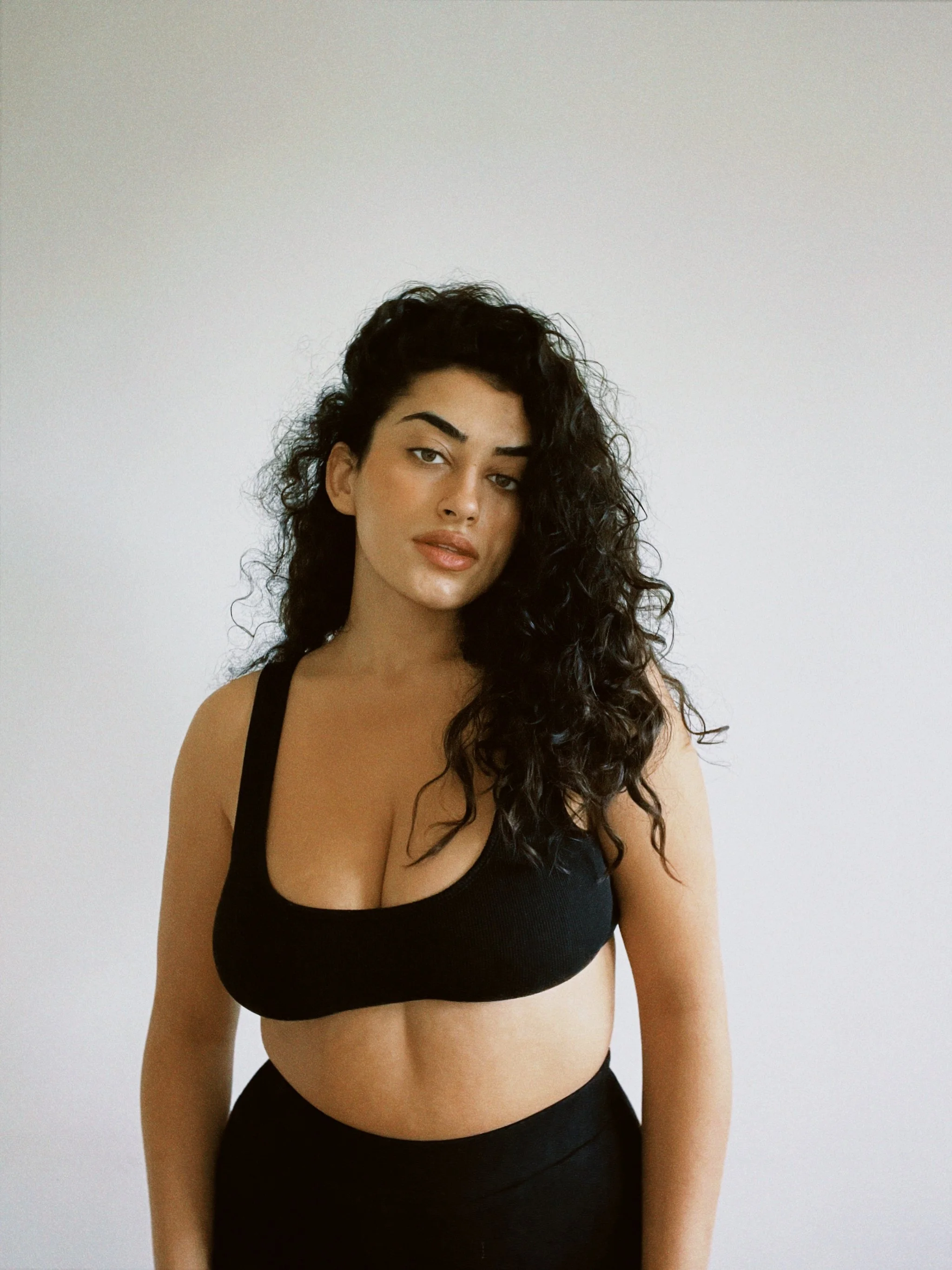
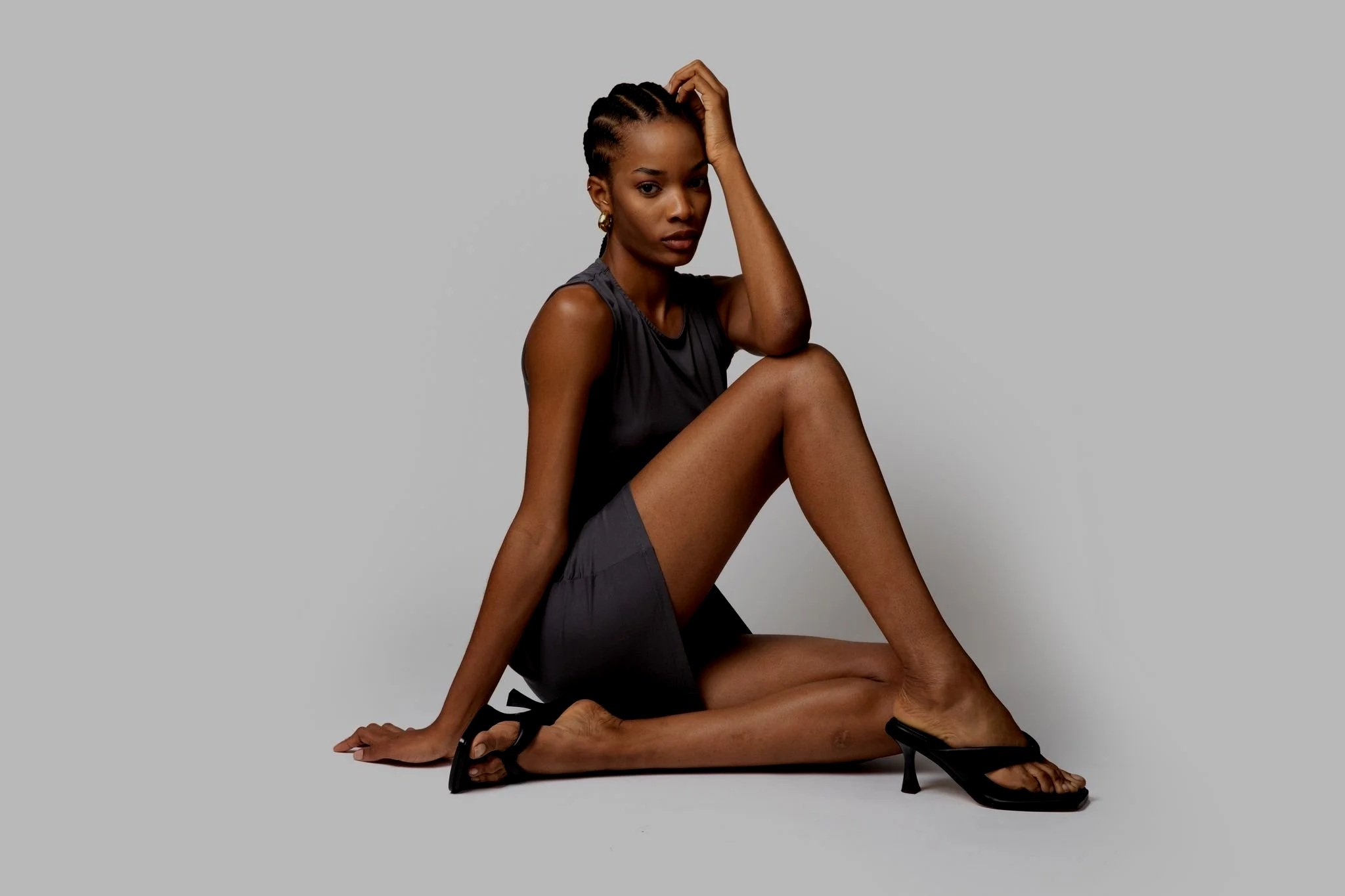
Brand identity: I developed the brand name, visual system, and tone of voice to reflect the mission — effortless, inclusive, sophisticated without being exclusive. The visual identity was applied consistently across the website, packaging, and social channels. All brand photography was shot unretouched, featuring models across a genuine range of body types, ages, and ethnicities. That wasn't a marketing decision layered on top of the product; it was a direct expression of what the research had told me mattered most to the people I was designing for.
Digital experience: I designed and built the ecommerce site with conversion and brand clarity as the primary goals — clean navigation, strong product photography, and copy that spoke directly to the values the research had surfaced. I also directed three photoshoots and produced a digital lookbook to reinforce the brand identity across touchpoints.
Go-to-market strategy: I conducted a competitive analysis of five-plus brands to sharpen the positioning, then built a launch strategy combining organic content, targeted campaigns, and influencer collaborations. Working with limited resources pushed me to be precise about where to invest — which turned out to be useful discipline.
Navigating Real Constraints
Running a product business surfaces a category of design challenge that doesn't exist in the same way in digital work: constraints that are physical, financial, and irreversible.
When a delayed shipment threatened to miss the launch window, I made the call to fast-track a limited online drop to maintain customer momentum while the full collection was finalized. When my initial manufacturing partner couldn't provide adequate transparency around labor practices, I pivoted suppliers at significant cost and timeline impact rather than compromise on something the brand's values made non-negotiable. These weren't design decisions in the traditional sense — but they were exactly the kind of judgment calls that design thinking prepares you to make.
What People Are Saying
“"Thougtless takes the guesswork out of shopping by providing simple, sophisticated that embrace the body's natural shape and are soft to the touch...they're just fantastic." — ELLE Magazine
"Everyone needs good basics in their closets; and Thoughtless has them."— THE CUT
Impact
151% increase in revenue YOY — validating the brand's positioning and the research-driven product strategy
500% increase in subscriber growth YOY — reflecting growing brand trust and audience loyalty
165% increase in store sessions YOY — driven by a cohesive brand identity and conversion-focused site design
973% increase in social following — built through consistent visual identity and values-aligned content
Press coverage in ELLE and The Cut, both independently recognizing the brand's product and mission
Reflections
Building Thoughtless was the most demanding design project of my career — and the most instructive.
The skills that made the biggest difference weren't the ones I expected. I knew how to conduct user research and translate findings into design decisions. What I learned was how to do that when the stakes were real and the feedback loop was slow — when a wrong decision about fit meant a production run that didn't work, rather than a prototype iteration you throw away. That changes how carefully you think before you act.
I also learned something about the limits of naming and language in design. I named the brand Thoughtless to signal ease — the effortless feeling of getting dressed without overthinking it. In retrospect, I underestimated how language lands outside the context in which it was conceived, and how a word that feels liberating to the designer can feel ambiguous or even off-putting to the audience. It's a mistake I've thought about often since, and one that made me more rigorous about testing language decisions the same way I test interface decisions — with real users, before committing.
I closed the brand in 2025 to return to product design full time. That was a deliberate choice, not a retreat. Five years of applying design thinking to a harder, more ambiguous problem than most design roles offer left me a sharper researcher, a more decisive design lead, and a much more fluent collaborator with business stakeholders. I came back knowing things about how products actually get made — and what it costs when they don't work — that you can't learn any other way.