Digital Designer
Designed ecommerce and email campaign layouts, independently interpreting a sophisticated brand identity to produce editorial-driven digital experiences across product launches, seasonal campaigns, and site merchandising.
Overview
Role: Digital Designer Focus: Ecommerce design, email campaigns, editorial product layouts, brand expression
Club Monaco occupies a specific and demanding position in the fashion market; elevated enough to require genuine editorial sensibility, accessible enough to need clear commercial execution. Designing for the brand meant holding both of those things at once, in every layout, every campaign, every page.
I joined as a digital designer responsible for producing digital layouts across Club Monaco's ecommerce site and email campaigns. Working with minimal creative direction, I designed independently from brief to final execution, interpreting the brand's identity, making layout and hierarchy decisions autonomously, and delivering work that met both editorial and commercial objectives.
The Work
My scope covered two primary output types, both requiring the same underlying skill: the ability to translate brand identity into digital layouts that felt unmistakably Club Monaco without a rigid design system to rely on.
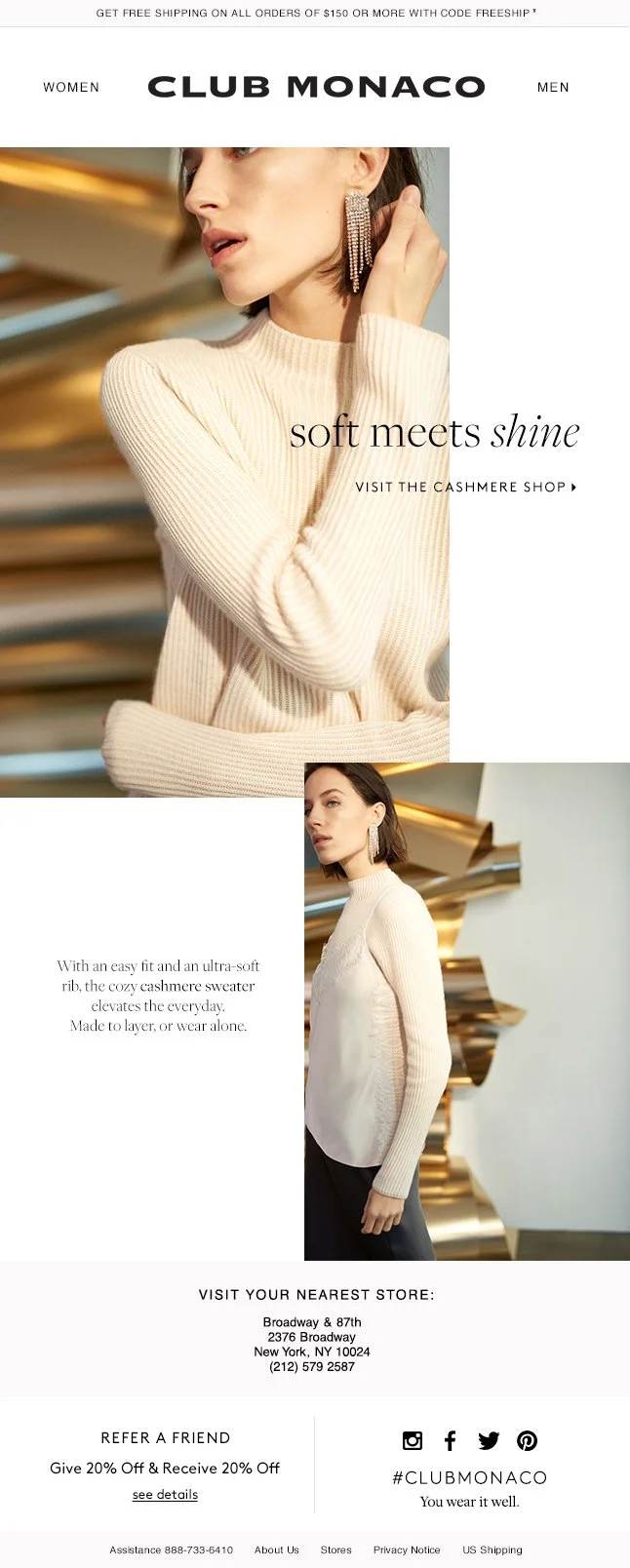
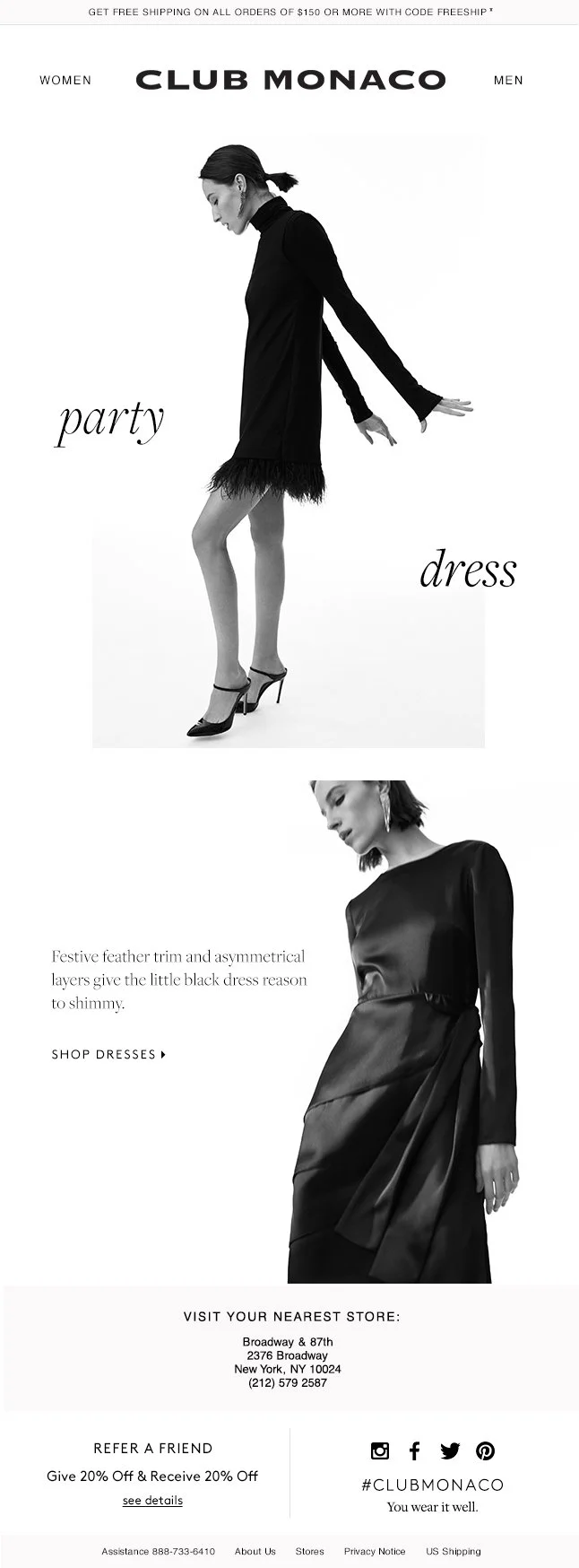
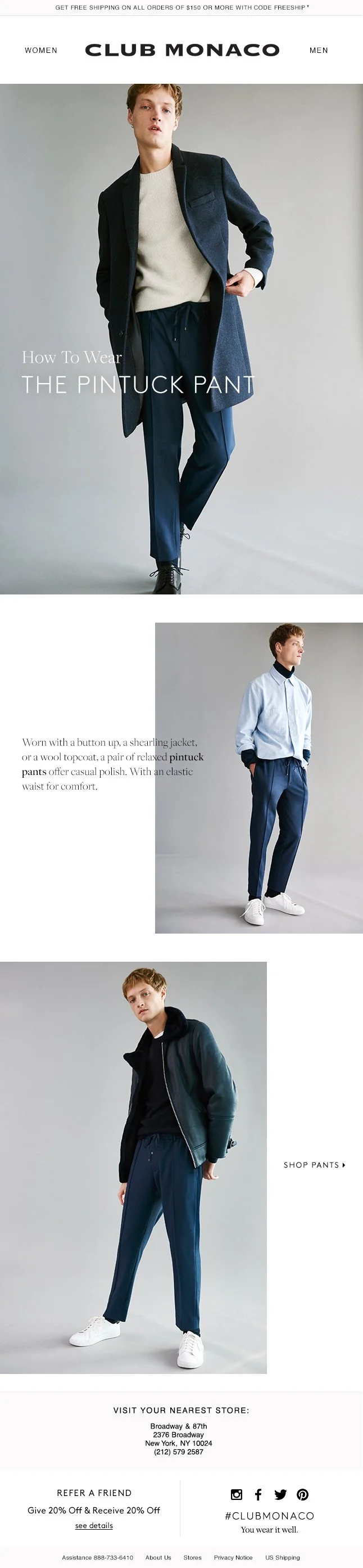
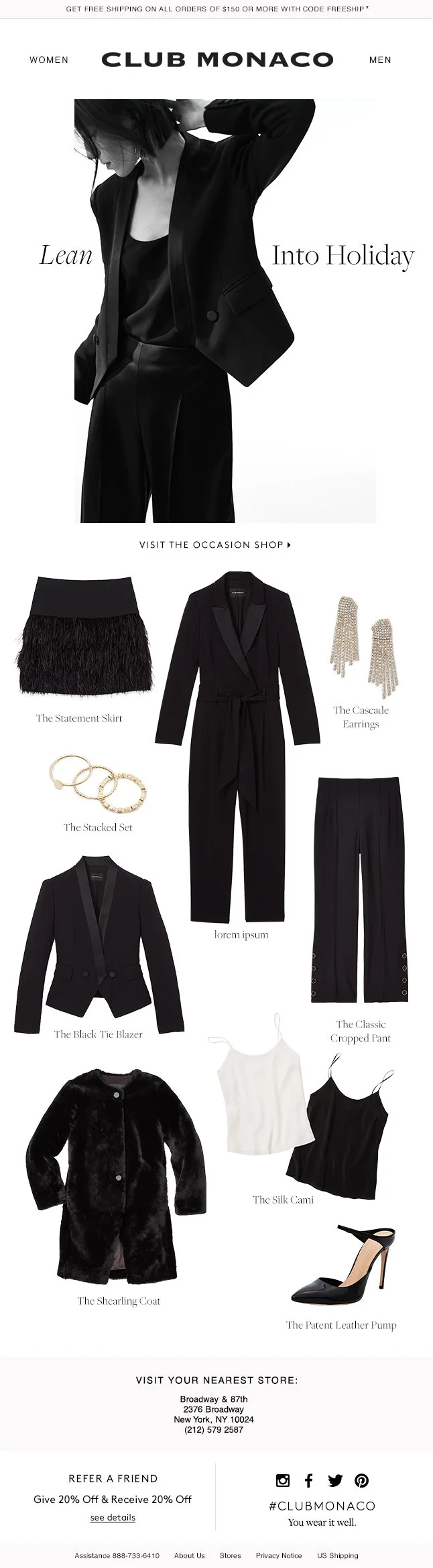
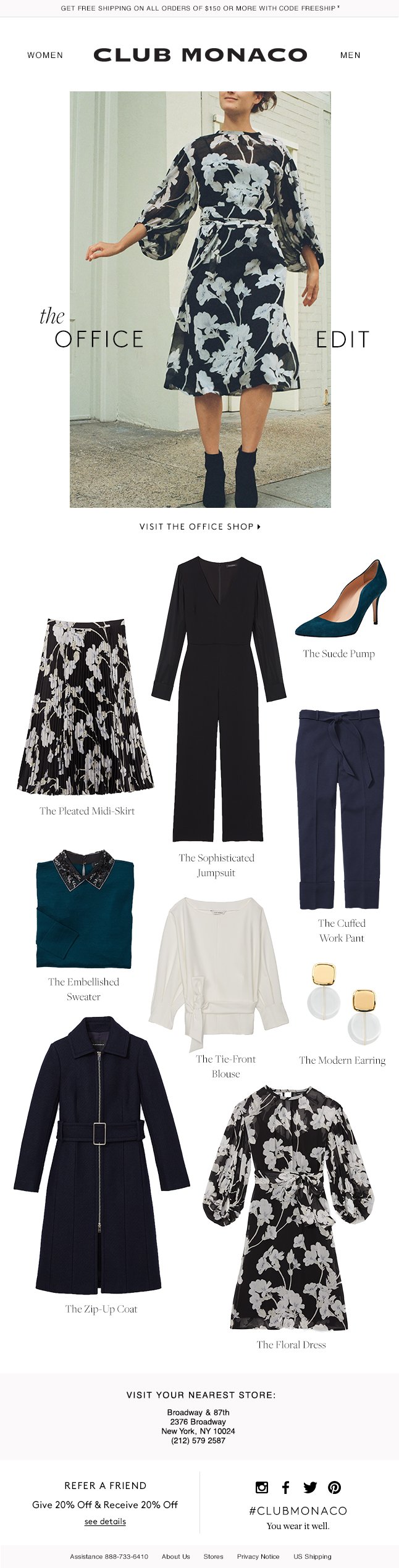
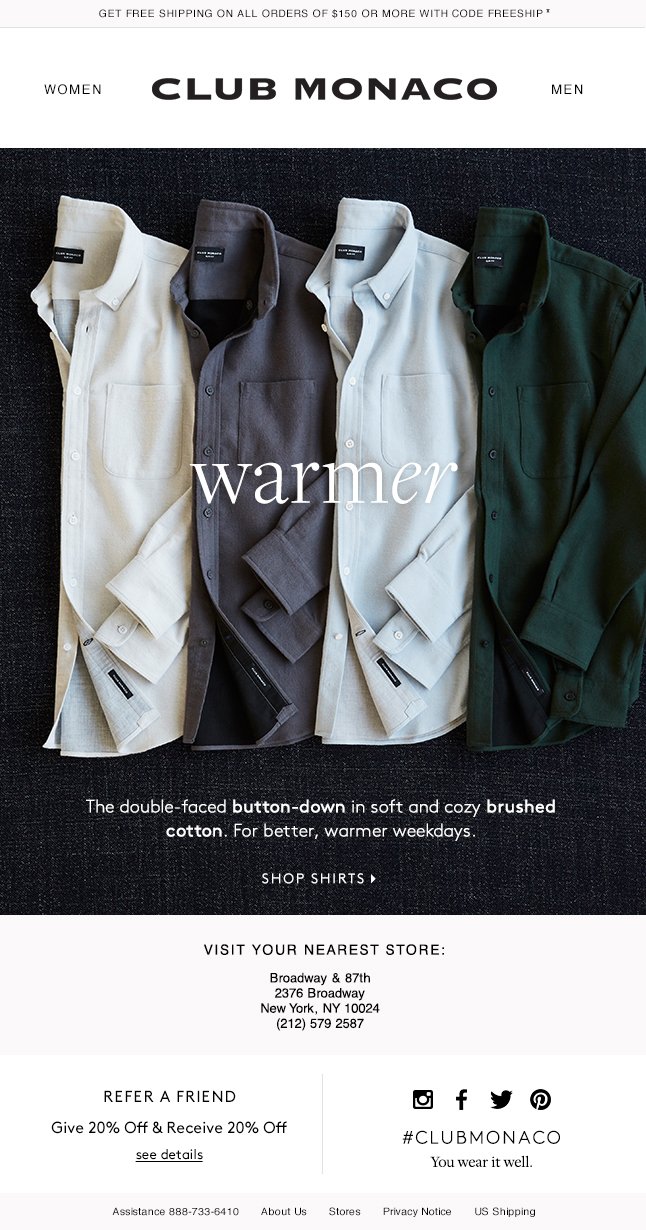
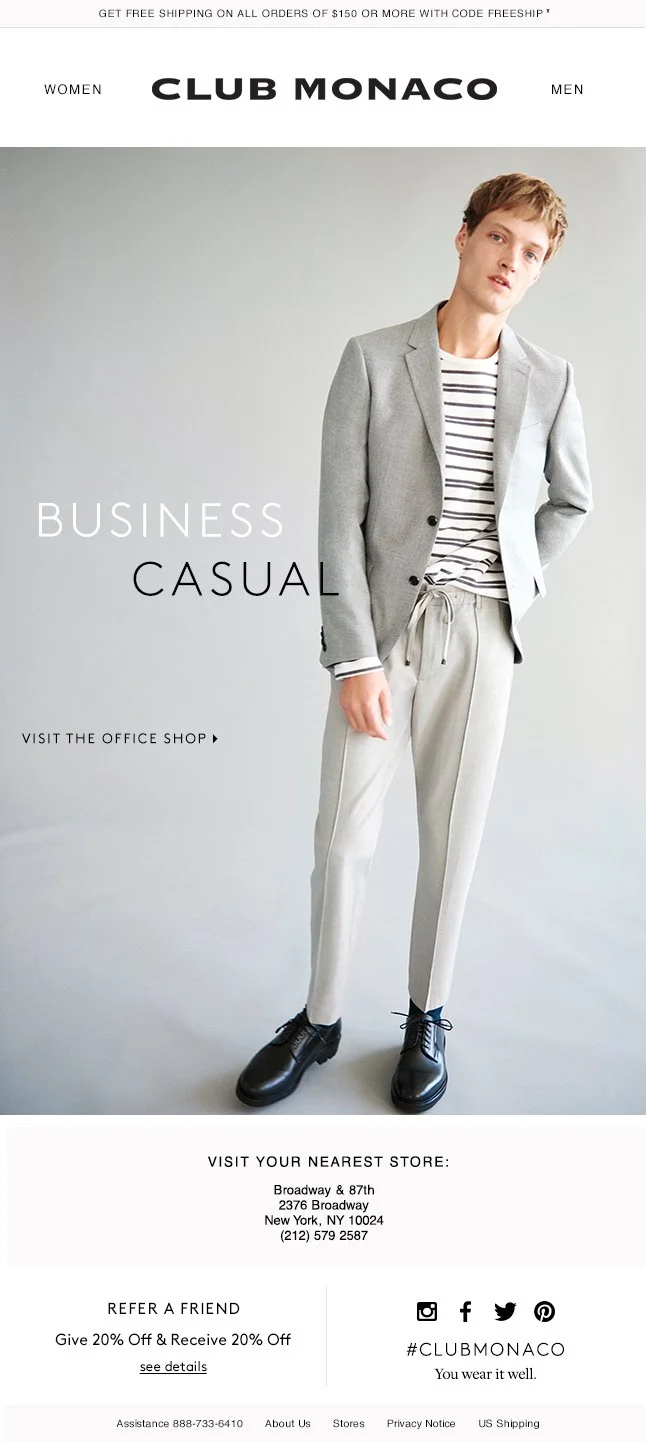
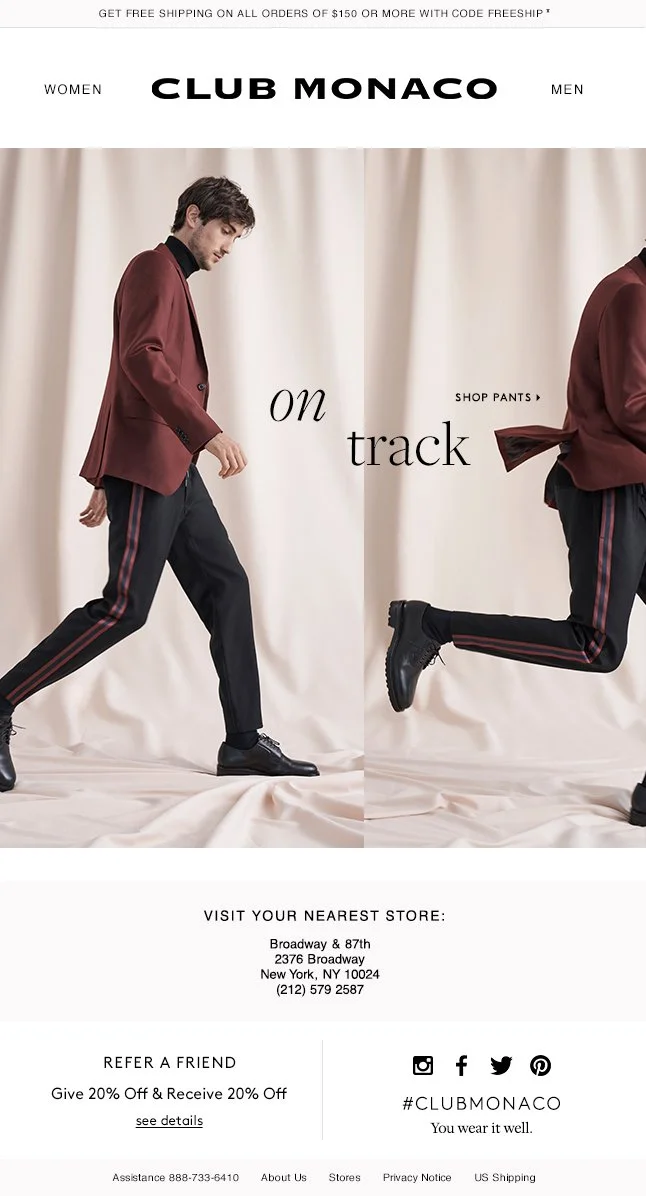
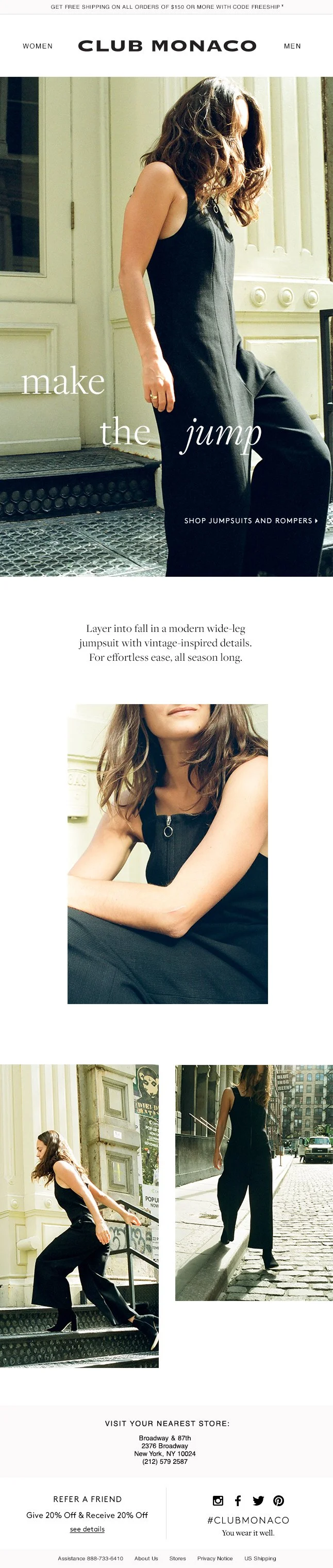
Email campaigns: I designed a range of Club Monaco's email communications; new arrivals, seasonal moments, product category features and editorial stories. Each one started with a brief, typically a product category or seasonal moment, and very little else. I'd immerse in the product first: what was being featured, what the editorial angle was, how it fit the broader seasonal story. The product mix shaped the structure; a single hero product for example, called for a different layout than a category sweep of new arrivals. From there, every hierarchy decision, typography, color application, what leads, what supports, etc. was mine to make. There was no template to fill in.
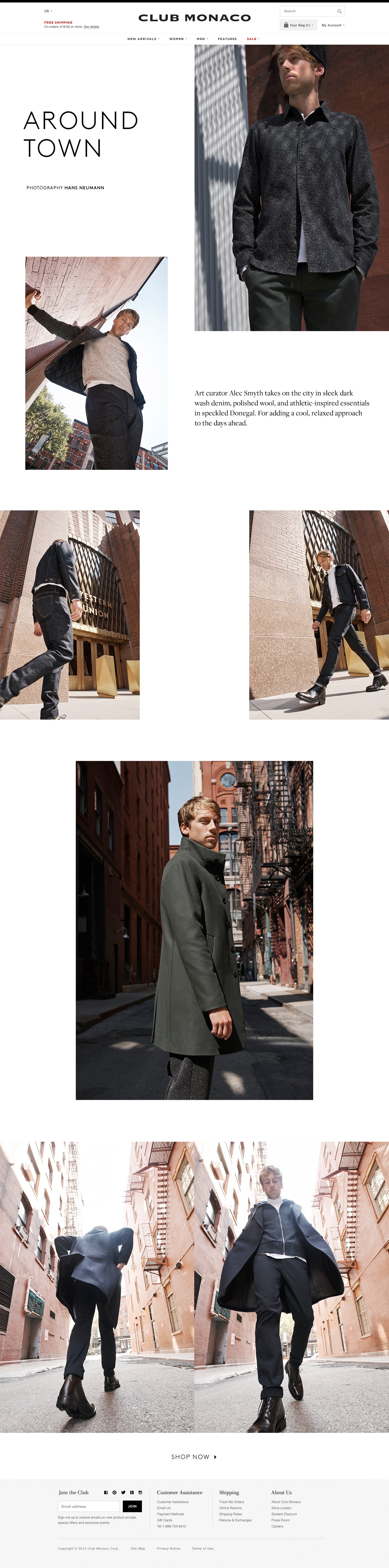
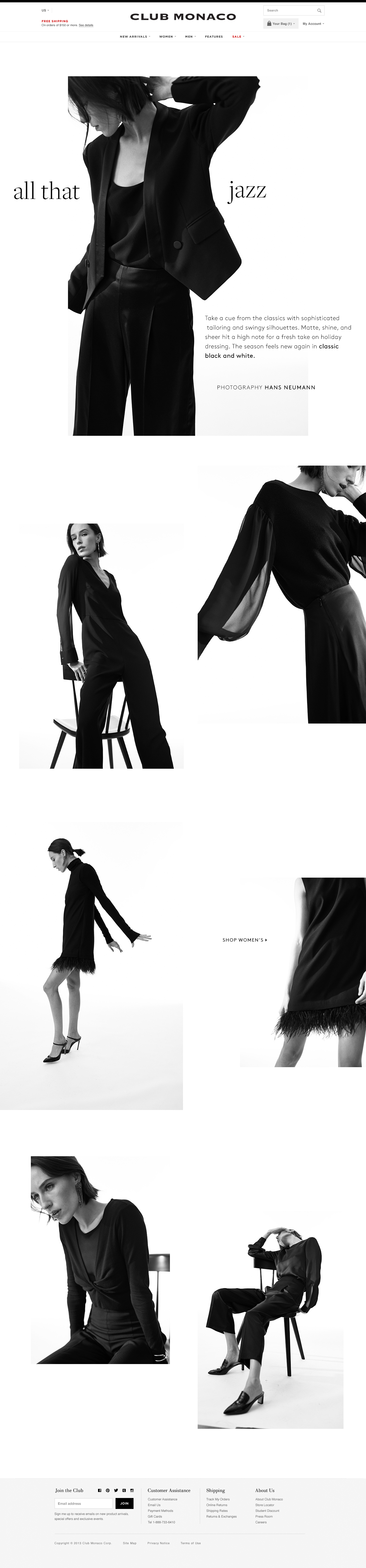
Ecommerce product and editorial pages: I designed site layouts for new product launches and campaign pages that sit at the intersection of content and commerce. These weren't standard product listing pages; they were editorial in approach, story-led and image-forward, with the product woven into a broader lifestyle narrative. The core challenge was almost always sequencing: getting the image to do the emotional work before the product information did the commercial work, so the page felt like a story rather than a catalog.
I worked directly with the creative director for approval and revision, but the design decisions up to that point were mine; which meant developing real internal judgment about when a layout was working, without a team review process or an established system to validate against.
Designing without a Design System
Club Monaco's brand guidelines gave me a typographic foundation and a general sense of visual direction — but the interpretive work was largely mine. There was no component library to pull from, no strict layout grid to follow, no set of pre-approved modules to assemble. What there was instead was a brand with a strong, recognizable identity — refined, understated, with a particular relationship between imagery and whitespace — and the expectation that I would internalize that identity and express it consistently across every deliverable.
That kind of constraint — loose enough to require real creative judgment, tight enough that getting it wrong is immediately visible — is in some ways more demanding than working within a fully defined design system. It requires a different kind of design literacy: not the ability to apply rules, but the ability to understand why the rules exist and what they're protecting, and then make decisions that honor that even when no one has written the rule down.
I learned to ask a specific question before finalizing any layout: does this feel like Club Monaco, or does it just look like fashion? The gap between those two things is where brand identity either holds or dissolves.
What this work required
Working at Club Monaco taught me things about brand-driven digital design that I've carried into every project since.
Brand fluency is a design skill. The ability to internalize a brand's visual identity deeply enough to express it consistently across formats and contexts, without a design system to lean on is as technical a skill as component architecture or layout systems. It just looks different.
Autonomy sharpens judgment. Designing with minimal direction, at volume, for a brand with high aesthetic standards is one of the faster ways to develop confidence in your own decisions. You learn quickly what you actually think, because no one else is telling you.